Michel Faber: The Fire Gospel

November 1st, 2008 Stewart

Posted in fundamentalism, Canongate, humour, satire, Scotland, religion, Faber, Michel

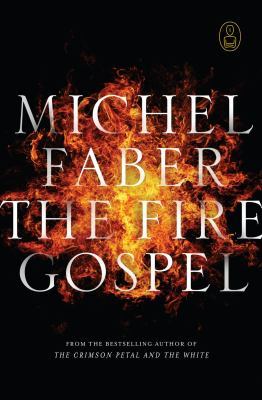
Michel Faber: The Fire Gospel

As I’ve mentioned before on this blog, I have a hit or miss relationship with the Canongate Myths series. The contributions of Jeanette Winterson and Margaret Atwood failed to excite me and, expecting no less from Ali Smith (see Girl Meets Boy), found myself suitably impressed. Now Michel Faber has entered the arena to present his reworking of the Prometheus myth, of how he stole fire from Zeus and gifted it to humanity, subsequently being punished for his crime.

Unlike the other writers in the Myths series so far, Faber is one I do enjoy reading: his style is always light, his subject matter nothing if not protean. One only has to read his story collections to get a feel for the variety he’s capable of. Introduced via his The Crimsol Petal And The White, a huge, postmodern Victorian tale concerning the rise of a prostitute to civilised society, I was quick to seek out his other works - another novel, two novellas, and three short story collections. Add to that The Fire Gospel (2008).

Faber’s Prometheus is Theo Griepenkerl,  a Canadian academic with a heightened sense of himself. He’s in Iraq, courtesy of the museum he works for, to tour a looted musem with the intention shipping artefacts home. The tour doesn’t last long as a bomb goes off killing the curator and, by chance, spilling forth some papyrus scrolls hidden for almost two thousand years. His talent being Aramaic, Theo recognises the potential power of the scrolls and smuggles them out of the country:

He could barely wait. Those papyri were burning a hole in his briefcase. They were like a stash of pornography that he’d been forced to delay getting to grips with. Not that there was anything kinky in his attraction to the scrolls; the porn comparison was just…a metaphor. A metaphor for the promises the papyri were urgently whispering from the back seat, of what they were going to do for him.

The scrolls are written by Malchus, the high priest named in the Gospel of John, and deviate from the accepted story of the Gospels.What makes them historically significant is that they are an eye witness account of the Crucifixion, predating the other Gospels by at least thirty years. What else can Theo do but publish them? In doing so, in his role as Prometheus, he brings fire to the world.

The tone of The Fire Gospels is satire. To a publishing industry that has seen Dan Brown’s odious The Da Vinci Code and Richard Dawkins’ confrontational The God Delusion upset the apple cart of Christianity,  generating huge profits as they go, it remains to be seen what the reaction to physical evidence dispelling the Christian faith would be. Faber imagines the likely scenario, that of outrage, and has great fun with the worldwide reactions to such material, nowhere more so than a pitch-perfect chapter of Amazon reviews, complete with the spelling mistakes, irrelevant opinion, or ignorance that someone always seems to find helpful.

I did not buy this book, so this author will not make a dime off me. I read it over a two day period in my local bookstore. The so-called gospel of Malchus is a blatant forgery produced by Muslims to undermine our faith. It’s been tried before. When will they learn?

Beyond the religious aspect Faber takes time out to send up the book industry, in areas such as remuneration, book tours, and marketing. Then, beyond that, the very decline in culture itself, be it in the vacuous array of choice television offers or in noting that the advances for those contributing to culture is low while sportsmen are signing $10m deals.

In continuing with the Prometheus myth Faber has to continue the parallel. The punishment meted out by Zeus was being chained to a rock and have an eagle peck out and consume his liver, once it had grown back, daily. With Theo interested only in money and sex, and never straying into likeable or unlikable territory, it’s hard to care for his predicament when his punishment comes. It’s a low point in the book, especially at such a crucial point in the story, but given the satirical tone Faber just about gets away with it.

Like other Faber works, The Fire Gospels remains an open ended affair leaving the reader to draw their own conclusions. It’s good at what it does, spoofing the publishing hysteria over religious books in recent years, but all the time there’s the nagging sensation that Faber can do better.  However, as Theo notes, it’s a case of different strokes for different folks:

If there was one thing the Pandora’s box of Amazon customers had taught him, it was that there was no fiction so outrageously, laughably, arrogantly false that somebody somewhere wasn’t moved to tears by it.


Find out more at: Amazon UK | Amazon US | GoodReads

3 responses so far. Keep them coming. »

AddThis Social Bookmark Button

Michel Faber: The Apple (New Crimson Petal Stories)

June 1st, 2007 Stewart

Posted in Canongate, short stories, historical, Scotland, Faber, Michel

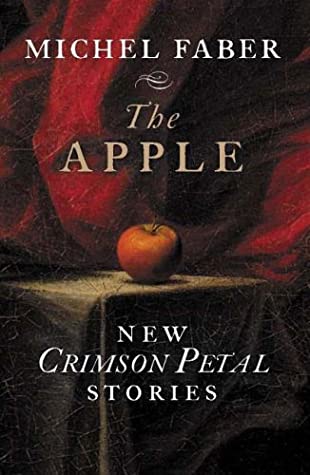
Michel Faber: The Apple (New Crimson Petal Stories)

Usually when coming to the end of a book of brick-like proportions, it’s good that the story is over. Not so, however, with Michel Faber’s The Crimson Petal And The White, an 835 page blend of sheer enjoyment and frustration. Set in Victorian London and using postmodern techniques, the novel, I would like to think, is one of the best published this century. With the book ending the way it did, it left readers the world over to guess at what happens next. And it would seem that many didn’t want to guess: they wanted to know; they wanted closure.

So now, to The Apple, a meagre collection of short stories from Faber that, four years later, returns to the world of The Crimson Petal And The White. In the foreword the author refers to letters from fans from all walks of life asking what happened next, only to have their questions subverted. There will be no sequel, Faber states, but he does offer this further set of tales which should shed some light on some of the characters.

Unfortunately, it would seem The Apple (New Crimson Petal Stories) is more of a cashcow between novels for Faber than anything else. As such, it will probably be only of interest to devout fans of the original novel. Two of the stories (Christmas on Silver Street and Chocolate Hearts from the New World) have previously been published, with the remainder written especially for this collection.

There are two stories about Miss Sugar, the whore, both of which look at her past. Christmas on Silver Street shows her as a tart with a heart as she introduces Christopher, the son of a prostitute in the brother where they work, to Christmas. The other, The Apple, shows Sugar becoming annoyed by a missionary’s treatment of her child, an event that inspires Sugar’s later scribblings in The Crimson Petal And The White. Both of these stories are simple snapshots, and twee to boot. They say little for the character of Sugar, or for the collection.

Some of the minor characters from The Crimson Petal And The White also muscle in on some of the action. A young Emmeline Curlew (Emmeline Fox in the novel) writes to cotton farmers in America asking them to free their slaves in Chocolate Hearts From The New World, to which, quite by surprise, she receives a selection of confectionary with an accompanying letter in response. Mr Bodley, strangely separated from his lifelong friend, Mr.Ashwell, arrives at a brothel only to be preoccupied by the sight of a fly upon a prostitutes buttocks, which renders him quite impotent, in The Fly, and Its Effect Upon Mr Bodley. Like the Sugar stories, these tales serve only to bring the characters alive one more time; unfortunately, they have very little to say.

In Medicine, a portrait is given of William Rackham’s life years after the novel ends; here it shows the decline of his business and of the man himself, in addition to his loveless second marriage. While an unsettling end for one of the novel’s major characters, there is little substance to be wrought from the tale. Rackham’s former employee, Clara, takes centre stage in Clara And The Rat Man. Since leaving Rackham’s home, Clara has, like many women in London struggling to make ends meet, fallen into prostitution. One day a strange client offers her a shilling per week to grow one of her finger nails. For what purpose, it’s best to read this story as it’s one that nicely stands alone from the The Crimson Petal canon and has much action and character to it.

The best story, however, is also the lengthiest, taking up more than a quarter of the pages: A Mighty Horde Of Women In Very Big Hats, Advancing. Where all the other stories play with events a few years before or after the events of the original novel, this story is set under the reign of a different monarch. Told as the reminiscences of Sophie Rackham’s son, it hints at what happened at the end of the novel although doesn’t deal so much with such events. Instead, the narrator recalls his mother in her thirties, a suffragette who, during a march, gets nostaligic for her past life. Although it gives as much information as one would need to get an idea of what happened after events in The Crimson Petal And The White, it ends in a similar manner - although this time we are promised more, but given less.

The best thing about this collection is, as always, Faber’s writing: light, breezy, with never a word out of place. Or an incorrect word in place. He certainly has the measure of his characters, it’s clear he is still in touch with their world. But with the novel ending with the call to let go, it feels like Faber should have taken his own advice. The Apple is a collection of well told stories but with little purpose; it’s hardly worth the bite.


Find out more at: Amazon UK | Amazon US | GoodReads

5 responses so far. Keep them coming. »

AddThis Social Bookmark Button

Michel Faber: The Courage Consort

May 31st, 2007 Stewart

Posted in Canongate, Scotland, Faber, Michel

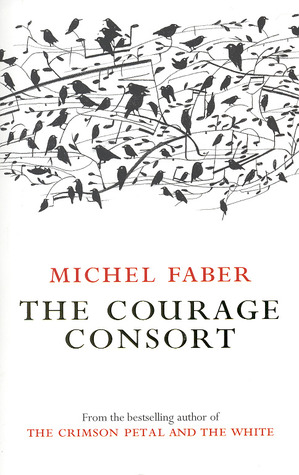
Michel Faber: The Courage Consort

Michel Faber’s The Courage Consort is one of those books where you wish it were longer or part of a collection. A novella of 150 pages it follows the story of a group of singers sent to Belgium for two weeks in order to rehearse a new avant-garde piece for an upcoming event. As they spend more time in each other’s company the group falls apart due to personality conflicts and personal problems.

Roger Courage is the founder of the singing group, named The Courage Consort, although the courage in their name comes from their willingness to tackle contemporary pieces in addition to the traditional standards. His wife, Catherine, is a manic depressive who, in preparation for the trip to Belgium, has forgotten her pills. Ben is an overweight bass singer who lives in his own personal world of silence. Julian is a seemingly bisexual vocalist with a love for Bohemian Rhapsody. And Dagmar, a young German, is the opposite of Catherine in her love for life; she has also, for the trip, brought along her newborn child, Axel.

The book begins with Catherine Courage sitting on the window ledge contemplating whether the four storey drop would be enough to kill her as her husband sit in the next room. As it continues the quintet spend the days practising Partitum Mutante, the avant-garde piece of Italian composer Pino Fugazzi, while the nights provide them with an over exposure to each other that leads to constant arguments about the direction the group should take. Their inability to work with each other leads to an incident that eventually breaks up the group, who are “possibly the seventh most renowned in the world”, although there is some hope for the group as evidenced by the optimistic ending.

The prose is light, the vocabulary restrained, and the plot simple. There is humour in this book but it’s not laugh out loud funny; the Brits’ interpretations of European accents, and the way characters communicate with each other. The characters are nicely done although the woman were better drawn than the males, a common occurrence in Faber’s work. Catherine, as the main character, is well conceived – her thoughts were realistic, her dialogue seemed right, and her mania added that extra bit of depth.

Faber’s novella is a good read, although, like in The Crimson Petal and the White, he leaves a few things unanswered – the source of a recurring noise from the nearby forest being a prime example – but this does provide scope for interpretation. Maybe we can presume that some parts of the story are delusions of Catherine’s. The Courage Consort almost succeeds as a standalone book, but I couldn’t help but feel that the characters needed a little more to fully appreciate them. That said, the story is still worth appreciating.


Find out more at: Amazon UK | Amazon US | GoodReads

Be the first to comment on this review. »

AddThis Social Bookmark Button