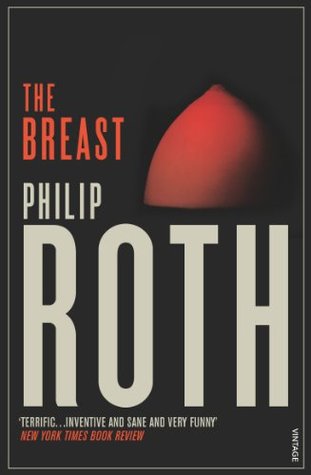
Philip Roth: The Breast

July 28th, 2009 Stewart

Posted in Vintage, 1001 Books, existential, satire, Roth, Philip, sexuality, first person narrator, America

Philip Roth: The Breast

Having intended, at one time, to read the books of Philip Roth in order of publication, a brick wall was soon hit with second book, Letting Go, Roth’s first novel proper and still his largest to date. It just went on and on, never serving up the satisfation of progress. Now, with that reading goal abandoned, it’s open season on Roth. But where to begin? In the end, I went for The Breast (1972), a thin slice of Roth that would hopefully whet the appetite for some more. Which it has.

The Breast is the first book in a trilogy involving Professor David Kepesh and is an extended short story that pays homage to Franz Kafka’s Metamorphosis. Where Kafka’s classic follows the experiences of the unfortunate Gregor Samsa as he, following uneasy dreams, wakes to find himself changed into a large beetle, Kepesh, thanks to a suspected “hermaphroditic explosion of chromosomes, wakes from a coma to find himself turned into a female breast.

…a mammary gland such as only could appear, one would have thought, in a dream or a Dali painting. They tell me that I am now an organism with the general shape of a football, or a dirigible; I am said to be of a spongy consistency, weighing in at one hundred and fifty-five pounds (formerly I was one hundred and sixty-two), and measuring, still, six feet in length.

Quite why Kepesh has found himself transformed is very much an irrelevance — he simply has, and how he deals with it is the subject of the book. It’s to Roth’s credit that he takes the initial idea and runs with it, ticking off the possible thoughts that someone in this predicament may encounter and doing so in a serious, contemplative manner.

 Alas, what has happened to me is like nothing anyone has ever known: beyond understanding, beyond compassion, beyond comedy, though there are those, i know, who claim to be on the brink of some conclusive scientific explanation; and those, my faithful visitors, whose compassion is deeply felt, sorrowful and kind; and there are still others — there would have to be — out in the world who cannot help but laugh. And I, at times, am one with them: I understand, I have compassion, I see the joke.

Although his situation is ridiculous and consciously invites laughter, the comedy of The Breast comes not from Kepesh but from those around him. He mutters lewd requests to his nurse who talks over him, never acknowledging his advances; his doctor tries to move his life on as if nothing has happened, and his father, a retired innkeeper now wasting his days working the phones for his brother’s business, seems almost oblivious to the changes that have come over his son:

He comes to visit me once a week and seated in a chair that is drawn up close to my nipple, he recounts the current adventures of people who were our guests when I was a boy. Remember Abrams the milliner? Remember Cohen the chiropodist? Remember Rosenheim with the card tricks and the Cadillac? Yes, yes, yes, I think so. Well, this one is dying, this one has moved to California, this one has a son who has married an Egyptian. “How do you like that?” he says, “I didn’t even know they would allow that over there.” Oh, Dad, I think to say, wonders never cease…

As one may expect, a large breast isn’t going to do much moving around and so the narrative is, for the most part, internalising punctuated with recollections of memorable scenes. Beginning with the question of ‘why me?’ Kepesh’s journey continues logically until he tries to convice himself that he’s mad, that he’s in a mental ward. The question of sexual frustration, that human desire for sex that can never be sated, is a major part of Kepesh’s struggle — being an organ incapable of orgasm is a nightmare. But the pain of adapting to the transformation seems all the more tolerable when faced with the alternative:

…having been terrified of death since I was two, I have become entrenched in my hatred of it, have taken a position against death from which I cannot retreat just because This has happened to me. Horrible as This is, my oldest and most heartless enemy, Extinction, still strikes me as even worse. Then you will say, maybe This is not so horrible after all. Well, reader, you say that, if you want to. All I know is that I have been wanting not to die for so long, that I just can’t stop doing it overnight.

All around Kepesh are people intent on staying within the blandness of life. His girlfriend isn’t sexually adventurous, his doctor ignores the magnitude of events, and his father hovers over smalltalk. When pondering his situation, Kepesh questions a “churning longing” to be  –

…utterly and blessedly helpless, to be a big brainless bag of tissue, desirable, dumb, passive, immobile, acted upon instead of acting, hanging, there, as a breast hangs and is there.

– and this nicely captures the idea of accepting the daftness of life and just getting on with it. This is what Roth is scrutinising in The Breast, and he successfully milks it for all it’s worth.


Find out more at: Amazon UK | Amazon US | GoodReads

10 responses so far. Keep them coming. »

AddThis Social Bookmark Button

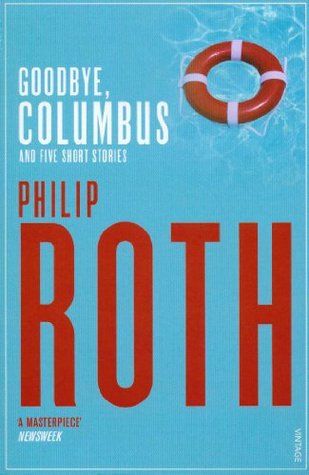
Philip Roth: Goodbye, Columbus

March 27th, 2008 Stewart

Posted in Roth, Philip, coming of age, Vintage, short stories, first person narrator, love, America, award winner, relationships

Philip Roth: Goodbye, Columbus

Here begins my Roth odyssey. And where better to start than the beginning? So, with that obvious logic in mind, the first in an oeuvre spanning twenty-eight books (a mix of fiction and non-ficton; of standalone and series novels) is Goodbye, Columbus (1959), a novella of around one hundred pages that won the National Book Award in 1960. Bundled with it are five more short stories, each complementing the greater work in theme and style. One may assume by its length that this was Roth stepping up, stretching those muscles in search of a novel.

In reading around the book it’s interesting to note that it caused controversy in its day for the unflattering portrayal of some Jewish characters. But with Roth himself coming from a Jewish background, and the stories showing hints of autobiography, it would seem he was at least in a position to be critical about the Jewish lifestyle. Of particular delight, is that in almost fifty years it has lost none of its bite.

In Goodbye, Columbus there’s a young Negro who comes regularly to the library where Neil Klugman works and sits each time with a book of Paul Gaugin’s exotic paintings, dreaming of Tahiti (”That ain’t no place you could go, is it?”). It’s a fitting metaphor for the novella’s main focus, the summer relationship between Neil, a poor boy from Newark, and Brenda Patimkin, a spoiled girl whose father, having laboured at his business, has moved the family on up from Newark to an affluent suburb.

Neil gets invited to the local country club twice: first by his cousin, where he meets Brenda; then by Brenda herself, after asking her out. Despite their social differences, they come together - Brenda doesn’t ask many questions - and find their fondness for each other growing:

We came back to the chairs now and then and sang hesitant, clever, nervous, gentle dithyrambs about how we were beginning to feel towards one another. Actually we did not have the feelings we said we had until we spoke them - at least I didn’t; to phrase them was to invent them and own them. We whipped our strangeness and newness into a froth that resembled love, and we dared not play too long with it, talk too much of it, or it would flatten and fizzle away.

That the froth only resembled love is no doubt fitting for this coming of age story. Given the frequency with which they engage in sex in her parent’s house, it’s clear that lust is more appropriate. Regardless, it fills a summer. But all good things come to an end and the ultimate breaker in the relationship is perhaps dated for readers of a more promiscuous age, eliciting more shoulder shrug than shock. Nevertheless, one can’t forget the novella is of its own time and, riding a wave of strong writing and excellent dialogue, it does it well.

The coming of age theme is reflected by way of Brenda’s athletic brother, Ron, introduced in said pool “like a crew-cut Proteus rising from the sea.” Ron’s at that stage in life where marriage is on the mind, but he’s nostaligic, looking back to past glories. Aside from music, his favourite record is a recording of his last day at school (”‘Big Ron’s last game, and it’ll be some time before Buckeye fans forget him’”) in which a voice offers a rallying cry to the university, reflecting on growing up:

“For many this will be their last glimpse of the campus, of Columbus, for many many years. Life calls us, and anxiously if not nervously we walk out into the world and away from the pleasures of these ivied walls. But not from its memories. They will be the concomitant, if not the fundament, of our lives. We shall choose husbands and wives, we shall choose jobs and homes, we shall sire children and grandchildren, but we will not forget you, Ohio State. “

Walking out into the world echoes the other major thread running through Goodbye, Columbus: assimilation. The Patimkin’s are a Jewish family and while they try hard to maintain their traditions, they find themselves, at the same time, trying to hide their heritage. The father thinks nothing of paying thousands to have the bend in his childrens’ noses fixed. Ultimately, Neil, a lapsed Jew, can’t assimilate into this family and, like Ron’s class of ‘57, it’s time to leave. “No sense carrying dreams of Tahiti in your head, if you can’t afford the fare.”

Of the other stories, each tackles contemporary issues of post-war Jewish life, mirroring Goodbye, Columbus’ notion of assimilation. The Conversion Of The Jews, about a young boy who questions Jewish teaching, is an obvious standout for its controversial conclusion, but it’s Defender Of The Faith, about a Jewish sergeant trying to help other Jewish soldiers under his command with their army life, that feels more complete. The others are lesser players, the final, Eli, The Fanatic, proving itself predictable and an unsatisfactory ending to the whole package. But while it’s Goodbye, Columbus, it’s hello to me, this new explorer on the sea of Roth.


Find out more at: Amazon UK | Amazon US | GoodReads

10 responses so far. Keep them coming. »

AddThis Social Bookmark Button


sikiş izle Kuzey Güney porno oral porno porno izle porno izle film izle dizi izle porno izle geciktirici krem escort bayan google hack porno izle