Florian Zeller: Artificial Snow

December 4th, 2008 Stewart

Posted in coming of age, Pushkin Press, first person narrator, France, relationships, love, Zeller, Florian

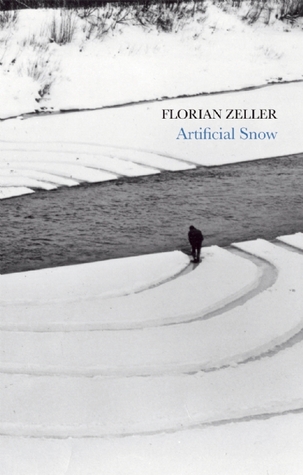
Florian Zeller: Artificial Snow

One of the pitfalls of reading literature in translation is that some authors see their work, if they see it all, come to the English language in a chronology all of their own. Artificial Snow (2002) was Florian Zeller’s debut novel, but it’s the last of his four to be translated and published. Reading his book, therefore, has almost been an exercise in regression. Having started with the mature and satisfying, The Fascination Of Evil, we now find ourselves back when the author, in his early twenties, was learning his trade and was style trying veer off from Kundera to a style all his own.

Artificial Snow, like Zeller’s recent novel, Julien Parme, is a coming of age novel, although it has more in common with his second, Lovers Or Something Like It, in that it deals with young Parisians caught up in the foibles of love, relationships, and their own self-importance. The last of these is exemplified when Zeller makes the decision to include himself in the novel:

Florian was a strange guy. He was twenty-one and a bit. Quite a bit. His life had been turned upside down by one incident and he’s never been the same again. When he was ten, during one of his experiments, he’d poked a piece of wire into an electric socket while holding it in his mouth. […] It was feared he’d lose the power of speech but, after intensive care, the only after-effects were a fierce desire to write books and a weird hairstyle: his hair seemed to be permanently crystallised on his head like untidy stalagmites.

Zeller, author of the novel, opens with a section titled ‘Boring prologue’ that reflects the disaffected nature of himself, which in turn sets the mood for the book itself:

Everything seemed terribly boring: getting up in the morning, going to bed at night, pretending not to pretend, shaking hands, being polite and romantic, studying and getting good marks, everything. I even found the prologue of the novel I was trying to write after a fashion tragically boring. But, then again, deleting it was even more boring.

From here we move into the narrator’s story, which begins with him missing his train on the Metro.  It’s a fine, if obvious, metaphor that foreshadows the main plot of the novel - that of relationships being like trains, where you hop on and off as life dictates. The train the narrator has missed was to take him to a party which carries some importance to him: Lou is going to be there (”In my dreams, she called me “my darling”; in reality, she didn’t call me at all…”) and he’s quite interested in getting back together with her after a brief relationship a few years before, even if it goes against all he believes in:

We’d spent a few nights together at the time and I didn’t like the idea of doing something I’d already done before. I felt that repeating things was always proof of failure. Getting back together with a girl was like admitting you hadn’t found anything better since, it was like admitting you’d reached your sexual peak somewhere between fifteen and sixteen; that sucked.

Even if the narrator would prefer not to go back, his love for Lou snowballs into obsession, so much so that he finds himself following her, maintaining a distance, and seeing his love melt when she doesn’t notice him, kisses another lover. When it looks as if all hope of reconciliation has faded, there seems only one solution: to wreak terrible acts of violence on her, to kill her. However:

The best crime, the best revenge, was to cheat on her, cheat on her as much as possible, defile her memory with fleeting moments of pleasure.

As far as story goes in Artificial Snow, there’s little of it, with Zeller preferring to relay a few events, presumably autobiographical, given his own inclusion in the novel, and to reflect on them, preferring philosophy over plot. While some of his lines are a tad simple (”making love and fucking are two very different things”) there’s still an invigorating energy running through the prose that skips past these, like them or not, and leads straight in to the next. Also, following the narration can be a little difficult at times, what with Zeller narrating in addition to his narrator, who just so happens to have a recurrent friend called Florian Zeller? Are the two Zeller’s the same? It’s foggy, but the openness of it is a welcome ponderable.

Shakespeare provides an epigraph at the start of the book, one that recurs later in the prose, saying where goes the white when melts the snow? Zeller’s snow is that of childhood, those crisp sheets of memory that we play over in our mind but can never return to. Here, the white turns to sludge, something tricky for the narrator to pull himself out from but altogether necessary for growing up. In writing Artificial Snow it seems a vessel for Zeller to grow up in. Later books show that it worked.


Find out more at: Amazon UK | Amazon US | GoodReads

1 response so far. Why not add your thoughts? »

AddThis Social Bookmark Button

Florian Zeller: Julien Parme

August 8th, 2008 Stewart

Posted in coming of age, Pushkin Press, loneliness, first person narrator, runaways, love, France, Zeller, Florian

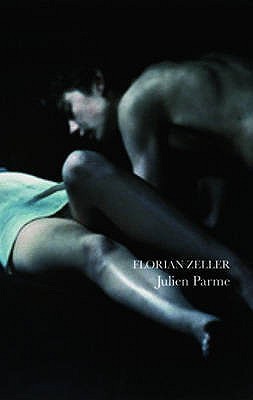
Florian Zeller: Julien Parme

Florian Zeller is an author probably best marked as ‘one for the future’, given that he is still to reach thirty, but that hasn’t stopped him in recent years putting out a number of novels and plays. Julien Parme (2006), is the fourth of his novels and provides an interesting bit of trivia in that two translations have been released this year - one in the US by Other Press, translated by William Rodarmor, and the pictured edition, in the UK, translated by Christopher Moncrieff, and published by Pushkin Press.

His previous novels, also from Pushkin Press, include Lovers Or Something Like It, a paean to a generation confounded by the abundance of choices facing them, and The Fascination Of Evil, a response to the controversy surrounding Michel Houellebecq’s Platform. Both of these demonstrated a solid style reminiscent of Milan Kundera and Houellebecq himself, the narrative veering off at tangents. So it comes as a surprise to find, with Julien Parme, a change in style.

While you were always sure that Zeller was in charge in previous novels, dripping observations across each page while recounting his characters’ adventures, Julien Parme is told completely by its title character, a fourteen year old boy who dreams of winning the Nobel Prize in Literature by the time he’s twenty. (”Julien Parme, you’ve never heard of him? The great writer? No? Really? Because I forgot to tell you I’d like to be a great writer.”)

Julien begins his account wanting  “to tell you about the incredible thing that happened last year”, before going on to say something contradictory…

That sort of person has always made me want to puke. That’s why if someone says he’s got an incredible thing to tell you, I’d be more the sort to be wary, because someone who says that, you shouldn’t give him the chance to go any further. Never.

…and then going back on that (”But in my case it’s not the same, seeing it’s me who’s doing the telling…”) Zeller captures well this meandering teenage mind as it criss-crosses itself through the story, heading off on imaginative flights, usually around Julien’s future as a famous novelist, something that, given the unoriginality of his titles (The Night Ahead of Me, a take on Celine’s Journey To The End of the Night, and the more obvious A Thousand Years of Solitude).

Julien’s imagination is no doubt the sum of a having few friends and his mother’s relationship with François (”…the latest in the long line of muppets…”). When he gets caught smoking his mother grounds him, forbidding him to attend the birthday party of Émilie, older sister of Mathilde who he harbours a fancy for, even though  he daren’t speak to her. But, teens being teens, Julien goes to the party anyway, and the weekend from there becomes a chain of events, some perhaps a bit unlikely, that lead up to the predicament described at the start of the story: looking back on the past year, having been sent off to a family friend in Saint-Dié.

What finished me off more than anything was the feeling that they wanted to get rid of me. My mother, then my uncle. Basically, no one wanted me under their feet. As far as they were concerned I was a hopeless case. Especially my mother; on the platform I definitely sensed she was telling herself: ‘Come on, just another little effort and that’ll be the end of the nightmare’. It freaked me out that she didn’t even look unhappy.

Where previous Zeller novels would have used the incidents in Julien’s life to wax  on about topics such as romance, friendship, bravado, and more, there’s little of that here in Julien Parme. While we wouldn’t expect a fourteen year old to be spitting aphorisms left, right and centre (or good ones, at any rate) there’s little sense that, in the year since, Julien has grown at all. Being even more isolated than before, you would think, would stir up a stream of reflections on where he went wrong. But the novel tends to wallow in a straightforward account that, because the conclusion is gifted from the off, holds little surprise.

In its defence, Zeller hasn’t went the way of many writers who tackle the child narrator by giving Julien that common get-out-of-jail card: making him precocious. If anything he’s a danger to himself, unsure of the world and just beginning to get interested in its wonders, such as women:

Several minutes dragged by, while in my mind thousands of words were jostling around everywhere, trying to work out what to say. Then the moment came, and I leapt in with both feet.

“The music, it’s not bad is it?”

“You think? I don’t like it much, me.”

“Yeah, that’s true mind you, it’s not brilliant this music…It’s the kind of thing they play on the radio…”

I let it go for a moment, unsure even whether to add: “You’re right frankly, it’s useless this music. I haven’t really been listening. It’s crazy.” But I thought it best to change the subject, so I wouldn’t seem like a guy who’s easily influenced.

It’s a convincing piece of ventriloquism, the way Julien’s mind wanders, and the scrapes he bumbles into set up some interestng scenes, but it really does feel like Zeller’s taken his foot off the brake with this one. The change in style is certainly interesting and I hope that Julien Parme is a halfway house between the two as, I think, a blend of his last novel and this could push him to a larger audience. Florian Zeller, you’ve never heard of him? No? Really? But I already told you, he could be a great writer.


Find out more at: Amazon UK | Amazon US | GoodReads

2 responses so far. Keep them coming. »

AddThis Social Bookmark Button

Florian Zeller: The Fascination Of Evil

June 1st, 2007 Stewart

Posted in Pushkin Press, France, Islam, Zeller, Florian

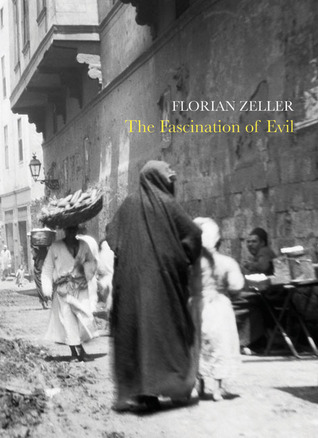
Florian Zeller: The Fascination Of Evil

Florian Zeller, from what I can gather, is the latest darling of the French literary scene. At twenty-six, he is a novelist, a playwright, and a lecturer. And, for one so young, he has received a number of literary awards. His third novel, The Fascination Of Evil, was recently published by Pushkin Press, a publisher well known for producing quality books from international authors, new and old. And, as novels go, it’s a mature work with hints of Kundera, dealing with the decline of morals in both Islamic nations and the West.

The story begins with the unnamed narrator preparing for a flight to Egypt for a literary conference. He is due to meet and travel with Swiss novelist, Martin Millet, of whom he is aware but not acquainted in person or in work. And while the narrator, with his girlfriend at home, is looking for a quiet life, Millet is more interested in kicking up a fuss within Egyptian society, spouting his opinions on Islam, and, for most of the novel, finding local women who will have sex with him. This latter desire is inspired by letters Flaubert wrote about his time in Egypt. And, as Millet’s obsession grows, the narrator finds himself dragged further into the author’s world. Then, without warning, Millet vanishes. The narrator, of course, can do nothing but fear the worst for his companion.

The Fascination Of Evil concerns itself, at a deeper level, with the diminishing power of words. It looks at the suras of the Koran, at their hold over the devout, but then, as Millet learns during a meal, there are those who claim to hold true to the tenets of Islam yet, the minute they head to a more liberal nation, the words that dictate their faith are soon forgotten:

“They’re not Egyptian women. They are often Lebanese or Moroccan, but they are not Egyptian. And they only sleep with Saudis, I believe. In any event, for Egyptians, there is no prostitution and no sexual freedom.”

“What do they do?” lamented Martin.

“They bugger each other.”

Apart from that, the food was excellent.

Zeller, however, is not like Millet and is not out to upset Islam. Indeed, aside from pointing out the hypocrisy inherent with some Muslims, he also takes a swipe at Europe. The continent has allowed freedom to send it into decline. Political correctness has reared its ugly head and when religious groups (say, Muslims) protest at novels (Rushdie gets an honourable mention), we seek to remove the offence rather than staunchly support it. By seeking to be inoffensive we are watering down our own culture. Such subtexts lend the novel an impressive depth and you can’t help but agree with Zeller’s observations.

The book’s title, as it would be giving nothing away, relates to the feeling of fearing the worst. The narrator comes to feel the fascination of evil when Millet vanishes after a night out hunting women. But the true fascination, as implied by the denouement, is the fear of what is happening to the west. There are many facets in which our continent, the narrator believes, is falling apart, one such example being letter-writing:

It’s the telephone, and in particular the mobile, that has killed off the art of letter-writing once and for all. I often think of those women who lived in hope, with the pledge of one single love letter, when the other person, for example, went off to war. Back then, words had a formidable strength, since they decided lives. People waited, and trusted, even without news of the other person, for infinite lengths of time. Today, you start panicking the moment you can’t get that other person on your mobile. What’s he doing? Why isn’t she answering? Who’s he with? Anxiety has gained ground. We have entered a period of no return that signals the end of waiting, that is, of trust and silence.

Zeller’s prose style is not florid – to an extent it’s simplistic, realist. Each sentence serves to make a point or an observation and does so without decoration. If I were to have a criticism it would be the sheer volume of exclamation marks used where they were wholly unnecessary, although that may be a quirk of a translator who had a quota to use up, especially when they would appear in the narrative rather than within speech.

Although The Fascination Of Evil, at times, reminded me of Kundera because of the sporadic digressions the narrator would make, the ending was more reminiscent of Houellebecq (from whom Millet is no doubt inspired) that the narrator goes beyond the original narrative and aims to provide a conclusion to all that has gone before, something, I admit, for which I’m not a convert. But, overall, Zeller succeeds at producing a great tale that offers up some interesting points that merit consideration.

And, while he’s still young, The Fascination Of Evil showcases the wisdom of an fantastic talent who must surely be deserving of a great future in literature. And, since I’ve already been looking into his previous novels, it certainly looks like this novel could just be the beginning to my fascination of Zeller.


Find out more at: Amazon UK | Amazon US | GoodReads

3 responses so far. Keep them coming. »

AddThis Social Bookmark Button


sikiş izle Kuzey Güney porno oral porno porno izle porno izle film izle dizi izle porno izle geciktirici krem escort bayan google hack porno izle